It’s May, and if you walk into any school hallway this week, you’ll likely see “Thank You” banners, boxes of donuts in the breakroom, and plenty of coffee gift cards being handed out. It’s Teacher Appreciation Week, a time when we collectively pause to say thanks to the people who spend their days shaping the next generation.
At the Dyslexia Tutoring Program, we’re joining in on the celebration, but we’re doing it with a specific group of superheroes in mind: our tutors. While the world calls them tutors, we like to think of them as the “ultimate mentors.”
If you’ve ever sat in on a session or seen the transformation in a child who finally “gets” a concept they’ve struggled with for years, you know exactly what I’m talking about. Our tutors don’t just teach reading; they rebuild confidence, provide a safe harbor for frustration, and act as the bridge between a child’s potential and their reality.
In honor of Teacher Appreciation Month, let’s dive into why these individuals are so much more than just instructors.
The Shift from “Tutor” to “Mentor”
When most people hear the word “tutor,” they think of someone who helps a student finish their homework or prep for a big history exam. But at the Dyslexia Tutoring Program, the work is much deeper than that.
A teacher often has a classroom of 20 or 30 students. They have a curriculum to get through and standardized tests to prepare for. It’s a massive, difficult job. But our tutors work one-on-one. This intimacy shifts the dynamic from a traditional teacher-student relationship to a mentorship.
What’s the difference? A teacher delivers a curriculum, but a mentor delivers a future.
Our tutors see the “whole” child. They see the slumped shoulders when a kid walks in after a hard day at school. They hear the “I’m stupid” whispers that often accompany dyslexia. And they spend just as much time dismantling those negative beliefs as they do teaching phonemes. That is the hallmark of a mentor: someone who invests in the person, not just the pupil.
The Technical Mastery: The Orton-Gillingham Approach
We can’t talk about our tutors without talking about their incredible skill set. They aren’t just “good with kids”: they are highly trained specialists. Most of our tutors utilize the Orton-Gillingham (OG) approach, which is the gold standard for teaching individuals with dyslexia.
If you aren’t familiar with OG, it’s not your average “look at the picture and guess the word” method. It is a multisensory, structured, sequential, and cumulative way of teaching literacy. It requires the tutor to engage the student’s sight, hearing, touch, and movement simultaneously to help the brain make connections between letters and sounds.
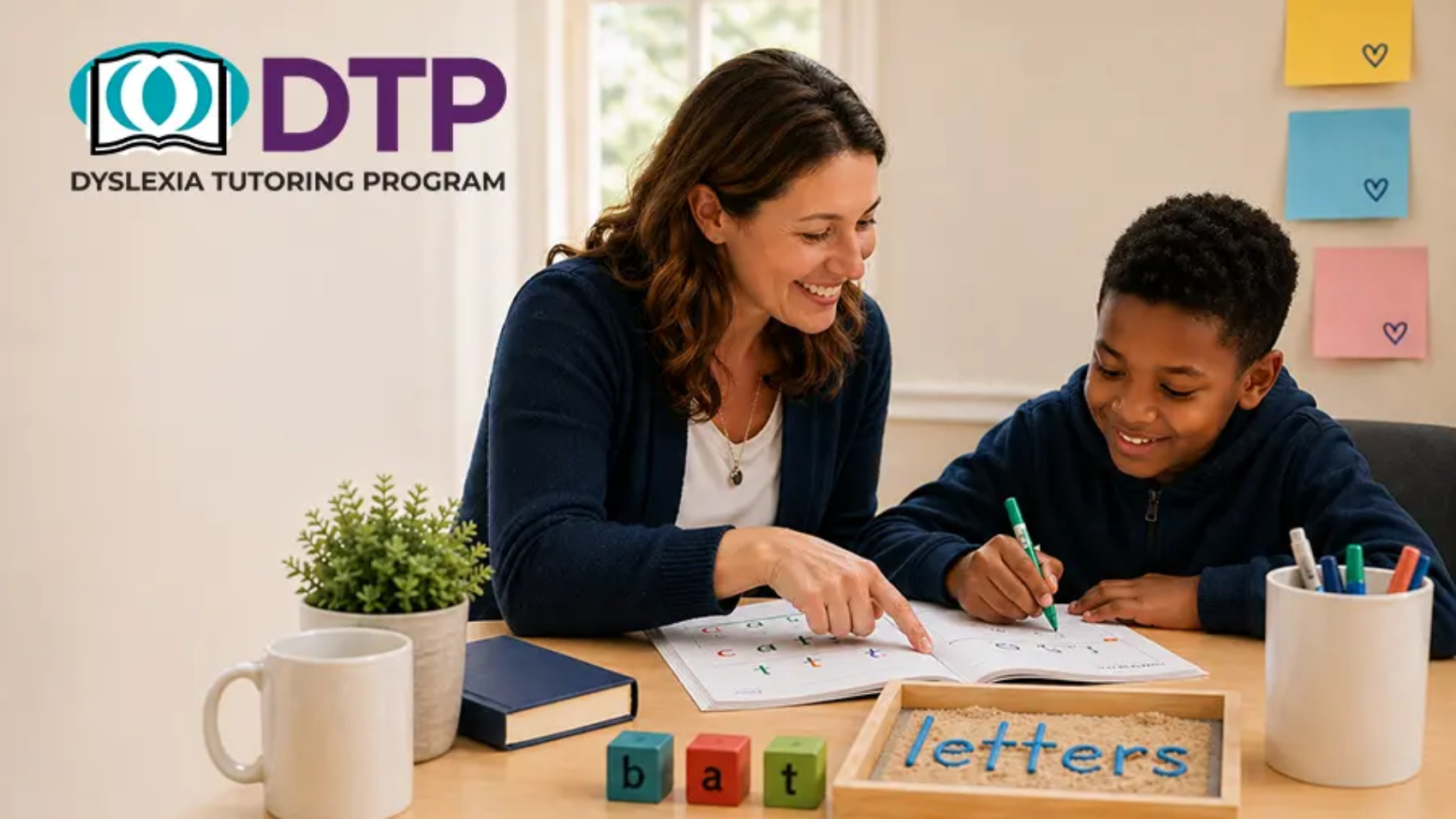
Teaching this way is an art form. It requires the tutor to be incredibly flexible. If a student isn’t grasping a concept, the tutor doesn’t just repeat the instruction louder; they pivot. They find a new way to engage the senses. They might use sand trays, air writing, or color-coded blocks. This level of technical expertise, combined with the patience of a saint, is what makes our tutors truly elite educators.
They are mentors who have mastered a specific craft to help their mentees navigate a world that wasn’t necessarily built for the way their brains work.
Building the Bridge: The Emotional Connection
For a child with dyslexia, the classroom can often feel like a place of constant “micro-failures.” Every time they are asked to read aloud, every time they can’t finish a timed test, and every time they see their peers racing through a book they can’t even start, their self-esteem takes a hit.
This is where the mentorship side of our tutors really shines.
Our tutors provide a “shame-free zone.” In a one-on-one setting, there is no one to perform for and no one to hide from. The bond that forms between a student and their tutor is built on trust. The student has to trust the tutor enough to make mistakes: big, messy, “embarrassing” mistakes: knowing they won’t be judged.
We often hear from parents that their child’s favorite hour of the week is their tutoring session. That’s not because the work is easy: OG work is actually quite hard! It’s because for that one hour, the child feels seen, understood, and capable. That emotional safety is the foundation upon which all learning happens. Our tutors are the architects of that safety.
Why Mentorship Matters: The Research Angle
The impact of having a mentor in an educational setting isn’t just a “feel-good” sentiment; it’s backed by research. Studies have shown that when educators act as mentors, the benefits ripple out far beyond the classroom.
For example, research in teacher development shows that mentorship is a primary driver for success. When new teachers have mentors, they stay in the profession longer and their students achieve more. We see the same thing in our program. When a student has a consistent, dedicated tutor-mentor, their academic trajectory changes.
But it’s more than just grades. Students with mentors are more likely to:
- Develop a “growth mindset” (the belief that they can improve with effort).
- Have higher levels of resilience when facing difficult tasks.
- Feel more connected to their community and school.
By providing this mentorship, our tutors are effectively “bridging the gap” that many of our students experience in traditional school settings. They are the ones who show our students that dyslexia isn’t a deficit; it’s just a different way of processing information.
Celebrating the Wins, Big and Small
In the world of dyslexia tutoring, “wins” don’t always look like an ‘A’ on a report card. Sometimes, a win is a student finally remembering the “magic E” rule. Sometimes, it’s a student picking up a graphic novel and reading a few pages for fun. Sometimes, it’s simply a student walking into a session with their head held high instead of looking at the floor.
Our tutors are there for every single one of those moments. They are the cheerleaders who celebrate the “aha!” moments and the steady hands that guide students through the “not yet” moments.
This Teacher Appreciation Week, we want our tutors to know that we see them. We see the hours they spend preparing lessons. We see the care they put into every interaction. We see the way they advocate for their students.
A Legacy of Literacy in Baltimore
As a nonprofit, the Dyslexia Tutoring Program relies on the heart and soul of our community. Many of our tutors are volunteers who give their time because they believe in the power of literacy. They are retirees, former teachers, parents who have been through the dyslexia journey themselves, and professionals who want to give back.
Their impact on the Baltimore area is immeasurable. Every child they help learn to read is another person who can fully participate in our community, pursue their dreams, and reach their full potential. They aren’t just teaching phonemes; they are strengthening the fabric of our city.
How You Can Show Your Appreciation
If you’re a parent or a student currently working with one of our tutors, a simple “thank you” goes a long way. But if you want to do a little more to celebrate them this month, here are a few ideas:
- A Handwritten Note: In a world of emails and texts, a handwritten note from a student telling their tutor what they’ve learned or how they feel about their sessions is a treasure.
- A Small Token: While we never expect gifts, a small gesture: like a favorite snack or a drawing: is always appreciated.
- Spread the Word: One of the best ways to honor our tutors is to tell others about the work they do. Share our mission with friends, family, or coworkers who might need our help or might want to become a tutor-mentor themselves.
- A Shout-Out: If you’re on social media, tag us and share a quick story about how your tutor has made a difference. We’d love to highlight their hard work!
To Our Tutors: Thank You
To every tutor who walks through our doors or jumps on a Zoom call to help a student: Thank you. Thank you for your patience. Thank you for your expertise. Thank you for showing up on the days when the lessons are hard and the progress feels slow. Thank you for being the person who didn’t give up on a child when they were ready to give up on themselves. You are more than teachers. You are mentors, advocates, and life-changers. We are so incredibly lucky to have you on our team.
Happy Teacher Appreciation Week!
Want to learn more about the amazing people behind our program? Visit our About Us page to see how we’re working together to end the cycle of low literacy in our community.