Hey everyone! It’s Dalbin here. As we roll through the beautiful month of April, I’ve been doing a lot of reflecting. If you’ve stepped outside lately, you’ve seen Baltimore starting to bloom, the Inner Harbor is bustling, the parks are getting greener, and there’s that specific kind of energy in the air that only spring can bring. But inside the walls of the Dyslexia Tutoring Program, something even more incredible is blooming.
April is National Volunteer Month, and while I try to make sure our team feels appreciated every single day, this is the time of year when we really pull back the curtain and show the world what makes us tick. People often ask me, “Dalbin, how does a nonprofit manage to provide high-level, specialized tutoring to so many families for free?”
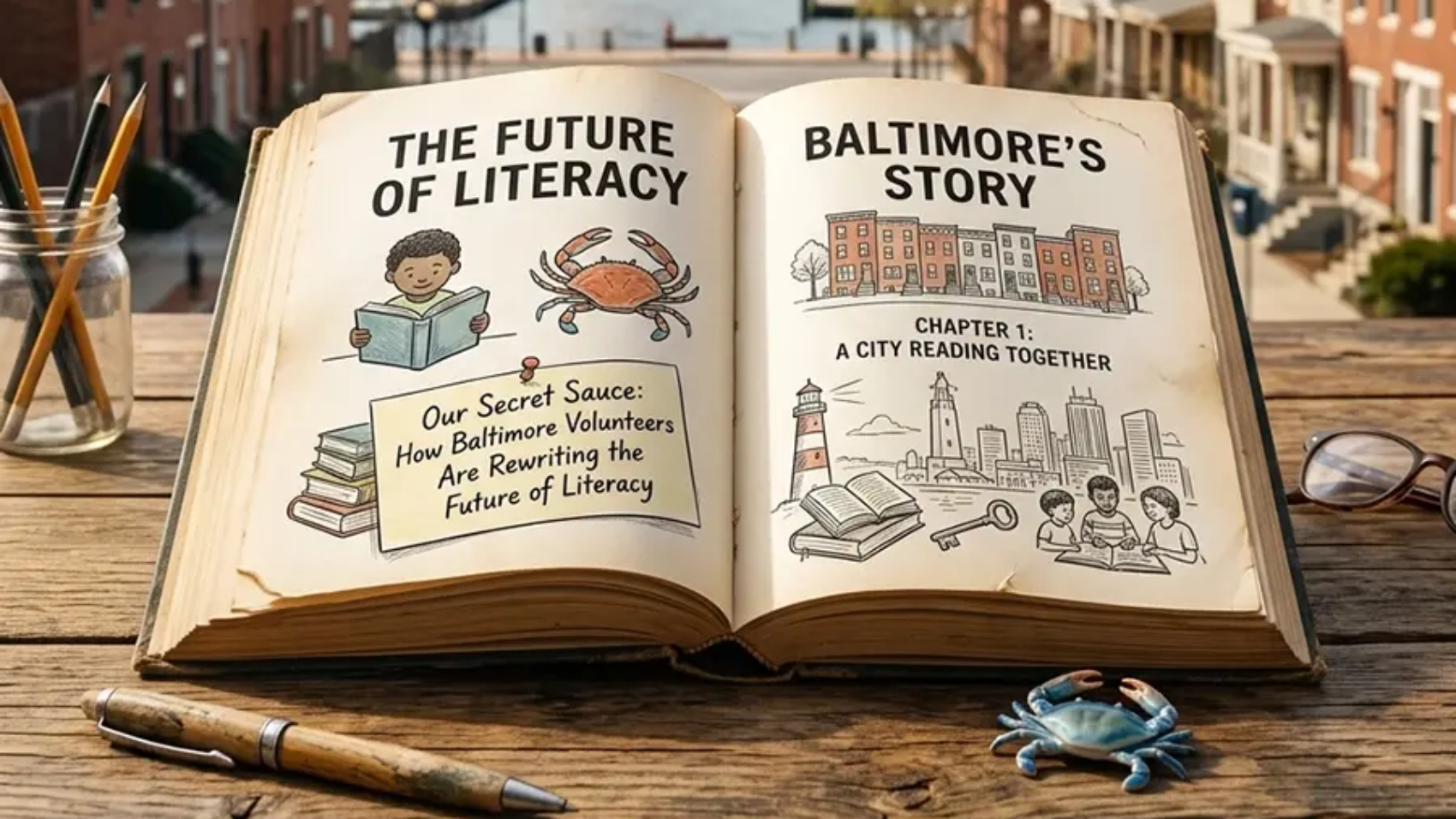
The answer is simple, yet profound. It’s our volunteers. They are quite literally our “secret sauce.”
Without the men and women who donate their time, their patience, and their hearts to our students, the Dyslexia Tutoring Program wouldn’t just be different, it wouldn’t exist. Today, I want to talk a bit about who these amazing people are and why the work they do is rewriting the future for families across Baltimore.
More Than Just “Helping Out”
When people hear the word “volunteer,” they often think of someone spending a Saturday morning picking up trash in a park or serving a meal at a shelter. Those are vital roles, don’t get me wrong. But volunteering at DTP is a different kind of animal.
Our volunteers aren’t just “helping out” for a few hours here and there. They are committing to a deep, long-term relationship with a child who has been struggling to keep their head above water in the classroom. They are becoming mentors, cheerleaders, and, most importantly, specialized instructors.

You see, teaching a child with dyslexia isn’t as simple as sitting down and reading a book together. It requires a specific set of tools and a lot of grit. Our volunteers step up to the plate knowing that the road ahead might be long, but the destination, a child who can finally read, is worth every second of the journey.
The Rigor of the Orton-Gillingham Training
One of the things that sets our program apart is the level of expertise our volunteers bring to the table. We don’t just hand someone a workbook and wish them luck. Every single one of our tutors goes through intensive training in the Orton-Gillingham (OG) approach.
For those who might not know, Orton-Gillingham is the gold standard for dyslexia intervention. It’s a multisensory, structured, and sequential way of teaching literacy. It breaks reading and spelling down into smaller skills involving letters and sounds, and then builds on those skills over time. It’s incredibly effective, but it’s also challenging to learn as a teacher.
Our volunteers spend hours in training before they ever sit down with a student. They learn how to engage a child’s sight, hearing, touch, and movement to help them connect language to words. They learn the “why” behind the English language, which, as we all know, can be pretty confusing!
When a volunteer completes this training, they aren’t just a “tutor” anymore. They are a specialist. And they provide this high-level, professional service to our families entirely for free. In the private sector, this kind of specialized tutoring can cost upwards of $100 an hour. Because of our volunteers, that cost is zero for the families who need it most.
Leveling the Playing Field in Baltimore
This brings me to the heart of why we do what we do. At the Dyslexia Tutoring Program, our mission is focused on helping those who have nowhere else to turn.
In many parts of Baltimore, especially in our low-income communities, a diagnosis of dyslexia can feel like a dead end. Public schools are often stretched thin, and while teachers do their absolute best, they frequently lack the specific training and the 1-on-1 time required to help a dyslexic student thrive. For a family living paycheck to paycheck, private tutoring simply isn’t an option. It’s a luxury they can’t afford.

This creates a “literacy gap” that can haunt a child for the rest of their life. We know the statistics: children who struggle to read by the third grade are more likely to drop out of high school, face unemployment, and even encounter the justice system. It’s a cycle that is incredibly hard to break.
Our volunteers are the ones holding the hammer and chisel, breaking that cycle one student at a time. By giving their time, they ensure that a child’s zip code or family income doesn’t determine their ability to read. They are leveling the playing field and giving these kids a fair shot at the “American Dream” we talk so much about.
The Direct Impact: A Story of Transformation
I wish you could all sit in my office for a week and see the transformations I see. I remember one specific student, let’s call him TJ. When TJ first came to us, he was in the fourth grade and couldn’t read a basic picture book. He was quiet, kept his head down, and had already started telling his mom that he was “stupid.”
He was paired with a volunteer named Sarah. Sarah wasn’t a teacher by trade; she was a retired office manager who just wanted to give back to her city. She went through our training, put in the work, and started meeting with TJ twice a week.
At first, it was slow. There were days when TJ was frustrated and days when Sarah felt like they weren’t making progress. But they kept showing up. Sarah didn’t give up on him. She used the OG techniques, brought in games, and constantly reminded him that his brain just worked differently, and that “different” wasn’t “bad.”

Fast forward a year. TJ walked into our office with his final report card. Not only had his reading grade jumped, but his confidence had exploded. He wasn’t the quiet kid with his head down anymore. He was talking about wanting to be an engineer. He handed Sarah a thank-you note that he wrote himself.
That’s the secret sauce. That relationship. That 1-on-1 attention that says to a child, “I see you, I believe in you, and I’m not going anywhere.” You can’t put a price tag on that.
Why They Do It
People often ask our volunteers why they do it. Why spend your retirement, your lunch break, or your evenings teaching someone else’s child to read?
The answers are always different, but the core is the same: compassion. Our volunteers recognize that literacy is a fundamental human right. They see the potential in these kids that the rest of the world might be missing.
Research shows that in Baltimore, literacy initiatives are most successful when they involve the community. Whether it’s older adults in the AARP Experience Corps or teens helping younger “reading buddies,” the magic happens in the connection. Our tutors aren’t just teaching phonics; they are building a stronger, more connected Baltimore. They are proving that we are a city that takes care of its own.
We Couldn’t Do It Without You
As we look toward the summer (and our upcoming “Summer Slide” prevention efforts!), I want to take a moment to say a massive, heartfelt THANK YOU to every single person who has ever volunteered with the Dyslexia Tutoring Program.
If you are a current tutor: You are a hero. Every hour you spend with your student is an investment in a better future for Baltimore. You are changing the trajectory of a life, and that is a profound legacy to leave.
If you are a former tutor: Thank you for the foundation you helped build. Many of the students you taught are now adults, working, thriving, and perhaps reading to their own children tonight because of you.

And if you’ve been thinking about volunteering but haven’t taken the leap yet: We need you. Our waiting list is long, and there are so many kids in Baltimore waiting for their “Sarah”, waiting for that one person who will show them that they can do this. You don’t need a background in education. You just need a heart for kids and a willingness to learn. We’ll provide the training; you provide the “sauce.”
Final Thoughts
National Volunteer Month will come and go, but the impact of our volunteers stays forever. To our tutors: please know that you are the heartbeat of this organization. You represent the very best of Baltimore: our resilience, our community spirit, and our unwavering belief in the potential of every child.
So, here’s to our volunteers. Thank you for rewriting the future. Thank you for being the secret sauce that makes the Dyslexia Tutoring Program so special. If you’re interested in joining our family of volunteers or want to learn more about how we support Baltimore families, contact us or learn more about our tutor opportunities. We’d love to have you on the team.
Catch you in the next post, where we’ll dive into how to support the emotional side of dyslexia for Mental Health Awareness Month.
Stay kind, Baltimore!
By Dalbin Osorio, Executive Director