At the Dyslexia Tutoring Program (DTP), we believe that literacy is a fundamental civil right. However, for many students in Baltimore and beyond, particularly those with dyslexia or other language-based learning differences, that right remains out of reach due to systemic educational disparities.
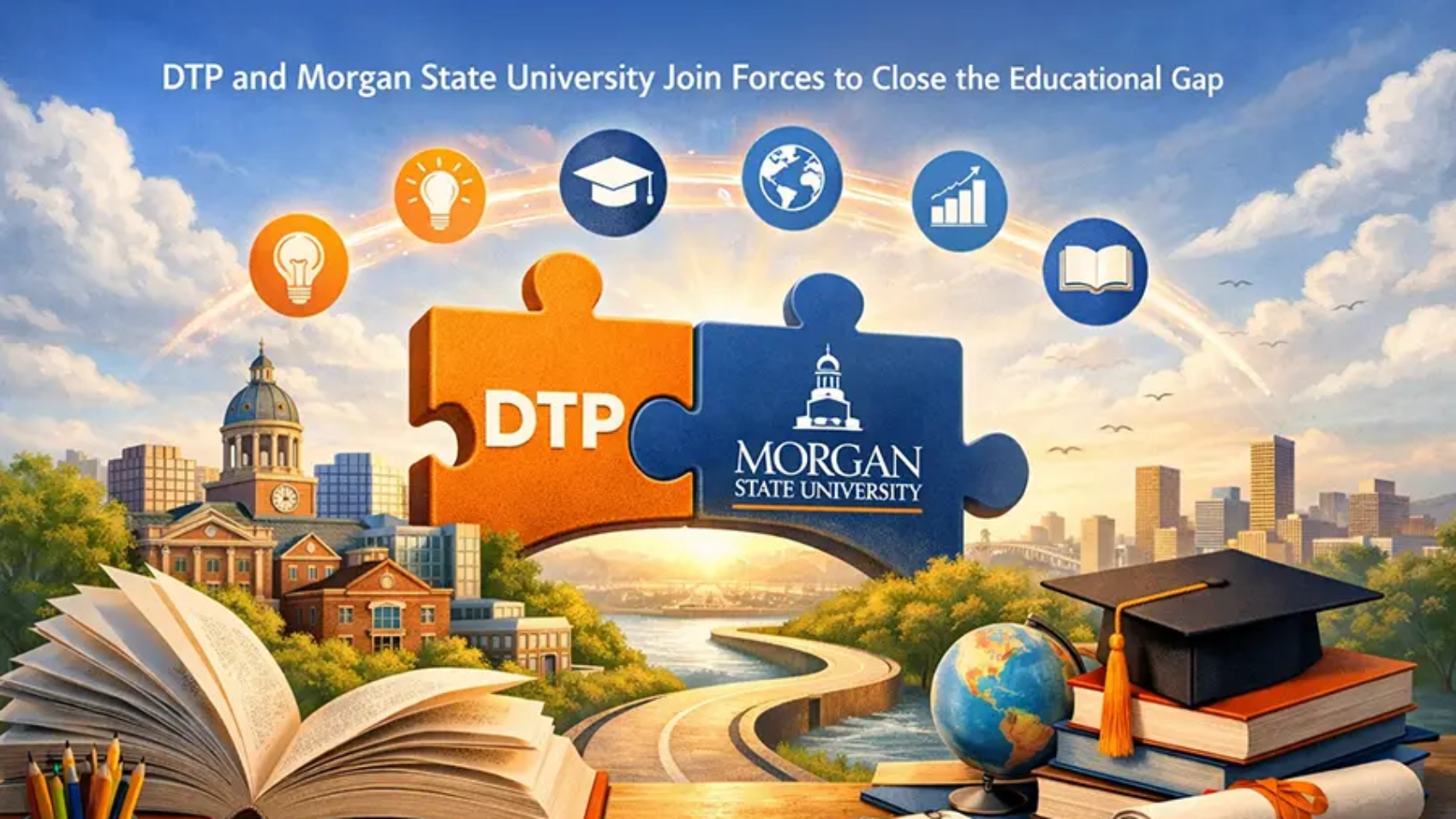
We are thrilled to announce a transformative partnership designed to change that narrative. DTP has officially joined forces with the National Center for the Elimination of Educational Disparities (NCEED) at Morgan State University. This collaboration isn’t just about tutoring; it’s about building a sustainable, research-backed pipeline of expert educators who are equipped to provide the high-dosage instruction our scholars deserve.
A Historic Partnership with a Local Powerhouse
Morgan State University has long been a beacon of excellence in Baltimore, but their commitment to literacy education has reached new heights. Morgan State is the first Historically Black College or University (HBCU) in the nation to have an undergraduate Elementary Education program accredited by the International Dyslexia Association (IDA).
This accreditation is a big deal. It means their teacher candidates are being trained in the most rigorous, scientifically proven methods of reading instruction. When DTP looked for a partner to help scale our impact, NCEED at Morgan State was the obvious choice. By combining DTP’s decades of “in-the-trenches” experience with Morgan State’s academic prestige, we are creating a force for change that Baltimore hasn’t seen before.
Training the Next Generation: The 25
We recently reached a major milestone in this partnership: the completion of an intensive training program for 25 Morgan State students. These aren’t just any volunteers; these are future professional educators who have committed themselves to mastering DTP’s Structured Literacy model.
Our model is unique because it doesn’t rely on just one philosophy. Instead, it weaves together:
- Orton-Gillingham (OG): The gold standard for multisensory, systematic, and cumulative phonics instruction.
- The Science of Reading (SoR): A vast body of gold-standard research about how the human brain actually learns to read.
- Education Best Practices: Proven pedagogical techniques that ensure students remain engaged, motivated, and supported.
These 25 students spent weeks diving into the mechanics of language, phonemes, morphemes, and syntax, and learning how to deliver this complex information to a child who learns differently. They are now ready to be matched with their scholars to begin the real work.
Caption: A graphic illustrating the DTP Structured Literacy model: The intersection of Orton-Gillingham, Science of Reading, and Modern Pedagogical Best Practices.
The Power of “High-Dosage” Tutoring
The term “high-dosage tutoring” is appearing more frequently in educational policy circles, and for good reason. It isn’t just “extra help” or “homework assistance.” High-dosage tutoring is defined by its frequency, consistency, and the quality of the curriculum.
Our Morgan State tutors will be meeting with their scholars two times a week for a total of three hours. Why this specific “dosage”? Because research shows that for students with dyslexia, consistency is the key to rewiring the brain’s neural pathways for reading.
The Evidence Speaks for Itself
Study after study has shown that high-dosage tutoring is one of the most effective interventions for closing learning gaps. According to a meta-analysis from the Abdul Latif Jameel Poverty Action Lab (J-PAL), tutoring programs led by trained paraprofessionals or university students, like our Morgan State partners, resulted in significant learning gains equivalent to an extra four to ten months of schooling.
For a student with a language learning difference, these gains are the difference between falling behind (often called the “Matthew Effect,” where the rich get richer and the poor get poorer in literacy) and catching up to their peers.
Description: A bar chart showing the growth in reading proficiency scores. One bar represents “Traditional Classroom Instruction Only” and the other represents “Traditional Instruction + High-Dosage Tutoring,” showing a significant 60-70% increase in the latter.
Solidifying Tier 2: Our Tiered Service Delivery Model
At DTP, we are in the process of refining how we serve our community. We know that every student’s needs are different, which is why we are moving toward a Tiered Service Delivery Model. This partnership with NCEED and Morgan State is the cornerstone of our Tier 2 rollout.
Here is how the model breaks down:
- Tier 1: Intensive, 1-on-1 tutoring with our most experienced specialized tutors for students with profound dyslexia or complex learning profiles.
- Tier 2 (The Focus of this Partnership): Targeted high-dosage tutoring for students who need more than the classroom provides but may not yet require one-on-one clinical intervention. This tier is designed to be scalable and impactful for a larger number of scholars.
- Tier 3: 3:1 Group Tutoring, led by experienced educators that DTP has trained
By solidifying Tier 2 through this partnership, we are ensuring that more students get help sooner. We don’t want to wait until a child is three grade levels behind to intervene. With the 25 tutors from Morgan State, we can reach more children in the “vulnerable middle”, those who are struggling but could thrive with the right high-dosage support.
Looking Ahead: Full Rollout for 2026-2027
While we are celebrating the successful training of these 25 students, this is only the beginning. This cohort represents our incubator phase, where we refine our logistics and matching processes.
Our ultimate goal is a full-scale rollout for the 2026-2027 academic year.
We envision a Baltimore where every student who shows signs of a reading struggle has immediate access to a Morgan State-trained DTP tutor. We want to eliminate the waitlists that have historically plagued nonprofit education programs. By utilizing the incredible talent pool at Morgan State, we are creating a sustainable engine for literacy.
Description: A roadmap graphic starting with “Morgan State Pilot 2026” and leading to “Full City-Wide Tier 2 Rollout 2026-2027.”
Why This Matters for Baltimore
This partnership is about more than just test scores. It’s about the future of our city. When a child learns to read, their entire trajectory changes. They stay in school longer, they have better employment prospects, and their self-esteem skyrockets.
By partnering with an HBCU like Morgan State, we are also ensuring that our tutoring force reflects the community we serve. Representation matters. When a young scholar sees a Morgan State student, someone they can look up to, mastering the science of reading and teaching them to do the same, it builds a bridge of confidence that no textbook can replace.
Join Us on the Journey
We are incredibly proud of our 25 new tutors. They have put in the work, and now they are ready to change lives. But as we look toward our 2026-2027 goal, we need your support to keep this momentum going.
Whether you are a parent looking for resources for your student, a potential tutor, or someone who simply believes in the power of literacy, there is a place for you in this mission.
The gap is closing, Baltimore. One scholar, one tutor, and three hours a week at a time.
Want to help us expand this partnership?
Consider making a donation to help cover the costs of materials and training for our next cohort of Morgan State students. Together, we can make literacy a reality for every child in our city.
If you have questions about the program or want to learn how your student can get involved, please contact us today.